The Murals That United a Neighbourhood in Chennai
In a world where neighbourhoods often feel disconnected and fragmented, one Chennai community proved that art has the power to bring people together. What started as a small initiative to beautify blank walls has blossomed into a movement that’s transformed both the physical landscape and the social fabric of a residential area in the city.
The Beginning: From Neglect to Vision
Every great story has humble beginnings, and this one is no different. A Chennai neighbourhood, like many others in our sprawling metropolis, was struggling with the typical urban challenges-deteriorating walls, lack of community engagement, and a sense of disconnect among residents who lived mere doors away from each other yet rarely interacted.
It was this very problem that sparked the idea in the minds of a few passionate residents. They envisioned transforming their mundane surroundings into a canvas for artistic expression. The question wasn’t just about making walls prettier; it was about creating something that would resonate with every person living there, regardless of age, background, or social status.
The neighbourhood chose to celebrate what makes Chennai unique-its rich Tamil cultural heritage, Dravidian architecture, classical arts, and the everyday stories of ordinary people. This choice proved to be the turning point.
Why Murals Matter for Chennai Communities
Chennai, often called the ‘Detroit of India’ for its auto industry and the cultural capital of Tamil Nadu, has a profound connection to art and literature. Street art and murals fit naturally into this cultural ecosystem. They’re not just decorative; they’re a form of public discourse that everyone can access and appreciate.
For residents, the murals became conversation starters. Families who had lived in the same apartment complex for years suddenly found themselves talking about the new artwork on the street. Children asked their parents questions about the stories depicted in the murals, leading to intergenerational conversations about Tamil culture and traditions.
The project also addressed a practical concern-well-maintained, beautiful neighbourhoods see less vandalism and crime. When people feel pride in their surroundings, they’re more likely to protect and maintain them. The murals transformed the area into a space where residents wanted to spend time, where they felt a sense of ownership.
The Artistic Process: Community Involvement at Every Step
What made this mural project truly special was its inclusive approach. Rather than bringing in outside artists to impose their vision, the community involved local artists, students, and even untrained residents who had artistic inclinations. Workshops were conducted where anyone interested could learn basic painting techniques and contribute to the murals.
Local schools participated enthusiastically. Students designed artwork inspired by their daily lives, school experiences, and family traditions. Some murals featured themes from Tamil literature, classical dance forms like Bharatanatyam, and scenes from traditional festivals like Pongal and Diwali.
The process created a sense of investment-these weren’t murals imposed on the neighbourhood; they were created by the neighbourhood, for the neighbourhood. Every brushstroke represented someone’s effort, someone’s vision, and someone’s desire to make their home more beautiful.
Breaking Down Social Barriers Through Art
One of the most remarkable outcomes was how the project transcended traditional social barriers within the community. In Indian neighbourhoods, social divisions based on class, religion, and caste can sometimes exist beneath the surface. The mural project created a space where these divisions became irrelevant.
A retired professor worked alongside a young college student. A homemaker collaborated with a businessman. People from different religious communities painted murals celebrating each other’s festivals. The scaffolding became neutral ground where social hierarchies dissolved, and everyone was simply a neighbour contributing to something collective.
This shared purpose strengthened social bonds. Residents who might never have exchanged more than polite greetings now knew each other’s names, families, and aspirations. The neighbourhood evolved from a collection of separate houses into a genuine community.
Celebrating Local Culture and Heritage
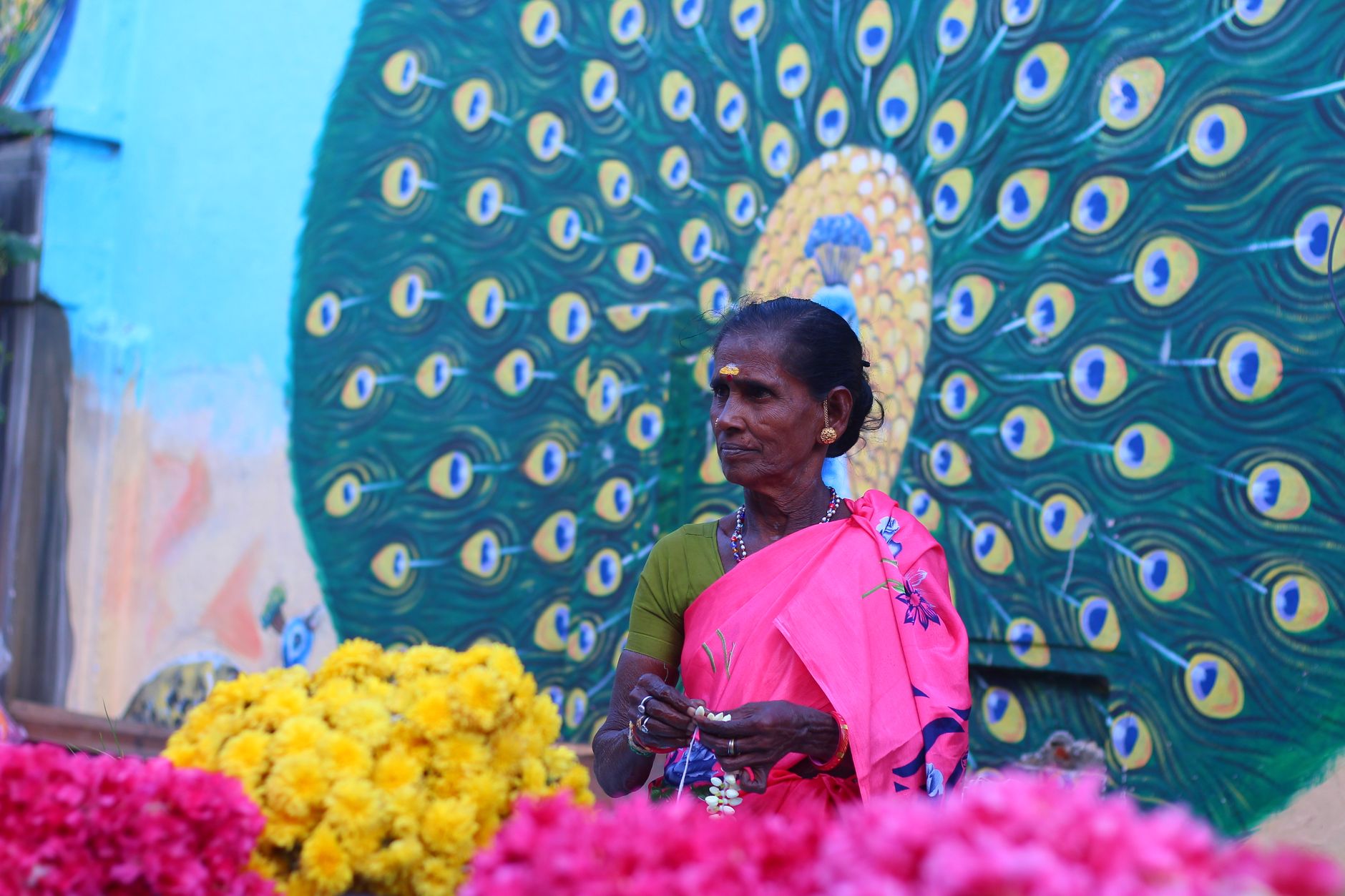
The murals themselves tell the story of Chennai and Tamil Nadu’s incredible cultural heritage. Some featured verses from Thirukkural, others depicted scenes from the Chola dynasty. There were murals celebrating local heroes, freedom fighters from Tamil Nadu, and contemporary figures who’ve made a mark in arts and literature.
One particularly moving mural captured the essence of Chennai’s monsoons and the flooding it experiences, blended with hopeful imagery of resilience and community support. Another celebrated the city’s famous filter coffee culture and the traditional South Indian breakfast spread.
These weren’t abstract artworks-they were narratives that every resident could connect with, stories that reflected their lives and their heritage.
The Ripple Effect: Beyond the Walls
What started in one neighbourhood has inspired other areas in Chennai to undertake similar initiatives. Word spread through social media, local news, and most importantly, through word-of-mouth conversations between neighbours.
The success of the project has also caught the attention of municipal authorities and urban planners who recognize the value of community-driven beautification projects. Rather than top-down urban development, this approach shows how grassroots initiatives can be more effective and meaningful.
Practical Advice for Your Neighbourhood
If you’re inspired by this story and want to create something similar in your own Chennai neighbourhood, here’s how to get started:
Start small: You don’t need a grand vision. Begin with one wall or even a small corner. Choose something visible where community members regularly gather.
Get permissions: Identify wall owners or municipal authorities responsible for public spaces. Explain your vision and secure necessary permissions before beginning any work.
Involve residents: Conduct community meetings to gauge interest and gather ideas. The more people involved in planning, the more they’ll take pride in execution.
Find local artists: Connect with art schools, colleges, and local art communities. Many young artists are eager to contribute to meaningful projects.
Celebrate local culture: Choose themes that resonate with your community’s heritage and current identity. Include stories and symbols that are locally significant.
Make it participatory: Organize painting days where residents of all ages can contribute, even if they’re not trained artists.
Maintain and evolve: Plan for maintenance from the start. Also, leave room for the murals to evolve as your community grows and changes.
The murals in this Chennai neighbourhood stand as a testament to the power of community, art, and collective vision. They remind us that in our increasingly digital and disconnected world, shared physical spaces and collaborative creative endeavors can restore genuine human connection. If one neighbourhood can transform itself through paint and purpose, why can’t yours?