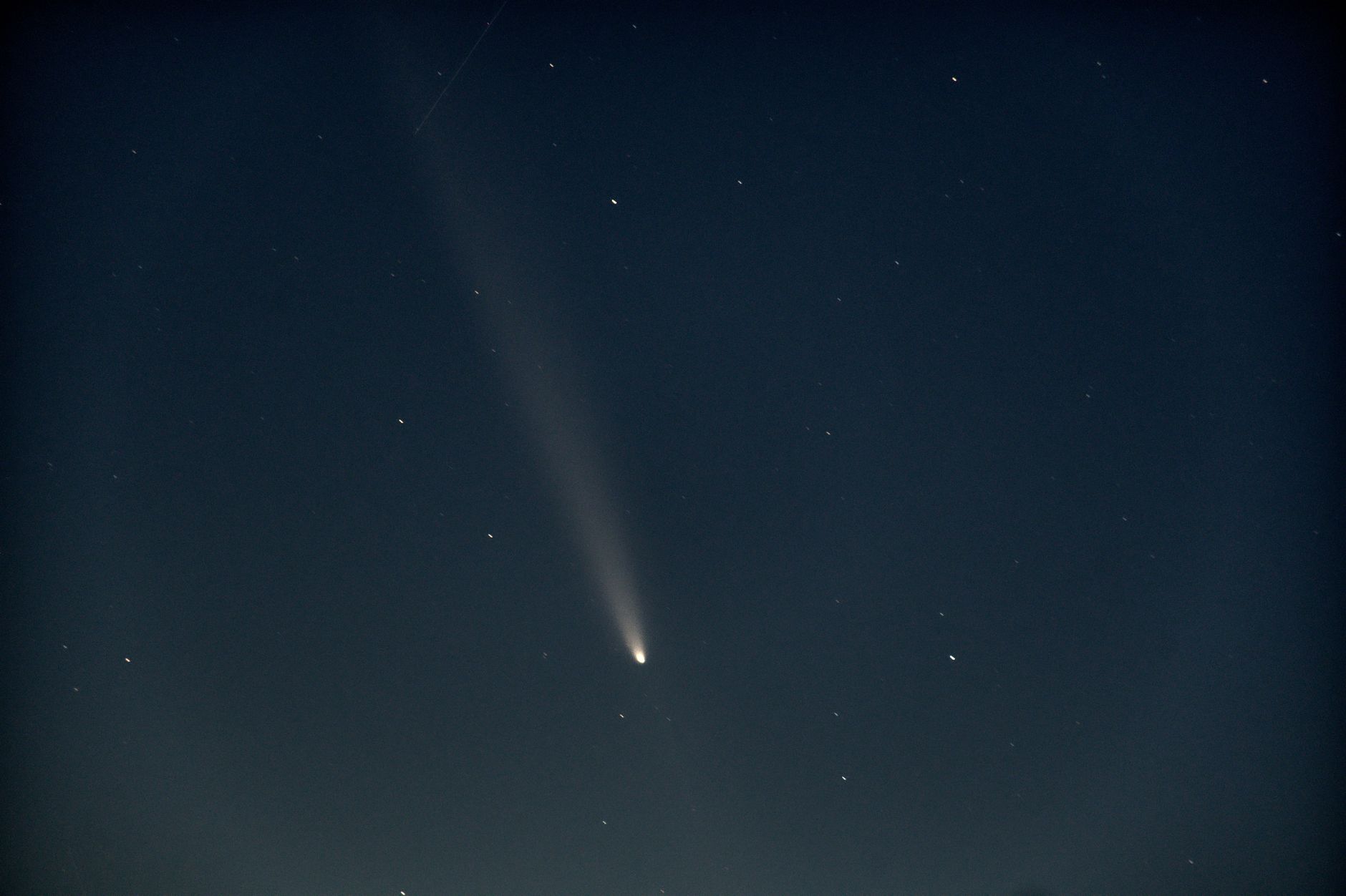
Scientists Scan Mysterious Interstellar Comet for Signs of Alien Life
In a fascinating turn of events that has captured the imagination of space enthusiasts worldwide, scientists from the SETI Institute (Search for Extraterrestrial Intelligence) have launched a dedicated search for alien signals from an interstellar comet known as 3I/ATLAS. This groundbreaking initiative represents one of the most significant efforts to detect extraterrestrial intelligence from an object that originated outside our solar system.
The comet 3I/ATLAS, discovered in 2017, is only the third interstellar object ever detected entering our solar system. What makes this discovery particularly thrilling is that researchers have now pointed advanced radio telescopes at this cosmic visitor, hoping to pick up any technological signals that might indicate an alien civilization.
Understanding the Interstellar Comet 3I/ATLAS
The designation “3I/ATLAS” tells us important information about this celestial object. The “3I” indicates it’s the third interstellar object confirmed to have entered our solar system, while “ATLAS” refers to the Asteroid Terrestrial-impact Last Alert System that discovered it. Before 3I/ATLAS, only two other interstellar visitors were confirmed: ‘Oumuamua in 2017 and Comet Borisov in 2019.
What makes studying these interstellar objects crucial is their potential to carry information about other star systems, other planets, and possibly even evidence of extraterrestrial civilizations. Unlike comets that have orbited the sun for billions of years, these visitors come from the depths of interstellar space, potentially carrying signatures of distant worlds.
The SETI Initiative and What They’re Looking For
The SETI Institute, based in California, has been systematically searching for extraterrestrial intelligence since 1960. Their mission is to detect signals that would indicate the presence of technological civilizations beyond Earth. When they targeted 3I/ATLAS with radio telescopes, they were specifically searching for narrowband radio signals-the type that would indicate artificial rather than natural cosmic phenomena.
The search used sophisticated equipment capable of detecting extremely weak signals across multiple frequency bands. If an advanced civilization had attached transmitters to this comet or were using it as a communication relay, the SETI scientists’ instruments would theoretically be able to pick up such signals, even across the vast distances of interstellar space.
Why This Matters to India and Indian Scientists
India has made significant strides in space exploration and astronomical research. The Indian Space Research Organisation (ISRO) has demonstrated remarkable capabilities through successful Mars missions, lunar explorations, and satellite programs. While ISRO wasn’t directly involved in this particular SETI observation, Indian astronomers and space enthusiasts have been following this development closely.
For India’s growing scientific community, particularly those working in astrobiology and space research at institutions like the Indian Institute of Astrophysics in Bengaluru and research centers across Tamil Nadu, such initiatives represent the cutting edge of global space science. These efforts inspire Indian researchers and students to pursue careers in fields that push the boundaries of human knowledge.
Chennai and Tamil Nadu’s Connection to Space Science
Chennai, the capital of Tamil Nadu, has emerged as a hub for space technology and research in India. Several ISRO facilities, including the Satish Dhawan Space Centre, and various private space technology companies have established operations in the state. The scientific community in Tamil Nadu has shown keen interest in international space research initiatives, including the search for extraterrestrial intelligence.
Educational institutions across Chennai and Tamil Nadu have begun incorporating astrobiology and space science into their curricula, inspired by discoveries and missions like the SETI search for alien signals. This kind of international scientific collaboration motivates the next generation of Indian space explorers and astronomers.
What Did They Find?
While the SETI observations of 3I/ATLAS were conducted with great scientific rigor and hope, the initial results did not reveal any clear signs of artificial signals. However, this outcome is far from disappointing in the scientific community. Negative results in the search for extraterrestrial intelligence still provide valuable data. They help scientists refine their search parameters, understand the universe better, and continue the methodical hunt for signs of cosmic neighbors.
The Bigger Picture: Humanity’s Quest for Cosmic Company
The search for extraterrestrial intelligence is fundamentally about understanding our place in the universe. Every observation, every data point, brings us closer to answering one of humanity’s oldest questions: Are we alone? This search transcends national boundaries, political differences, and cultural divides, representing humanity’s collective curiosity.
For Indian readers, understanding these scientific endeavors connects us to a global conversation about our cosmic significance and future. As India continues to advance its space capabilities, participating in and contributing to international efforts like SETI reinforces our nation’s role as a significant player in space exploration.
Practical Advice for Readers Interested in Space Science
If this fascinating story has sparked your interest in space exploration and the search for alien intelligence, here are some practical steps you can take:
Stay Updated: Follow official announcements from ISRO and international space agencies through their websites and official social media channels. Subscribe to reputable science publications like Scientific American or Nature for in-depth coverage of space discoveries.
Learn More: Consider exploring books on astrobiology and space science. View astronomy and astrobiology books on Amazon India to deepen your understanding of how scientists search for life beyond Earth.
Join Online Communities: Participate in online forums and communities dedicated to space exploration. Many Indian universities offer online courses in astronomy and astrophysics.
Support Science Education: Encourage young students to pursue STEM fields, particularly space science and astronomy. India needs more scientists contributing to global space research initiatives.
The search for extraterrestrial intelligence reminds us that we live in an age of scientific wonder, where ancient mysteries are being systematically investigated using cutting-edge technology. Whether or not 3I/ATLAS carries signals from beyond the stars, the quest itself represents humanity’s greatest aspirations.