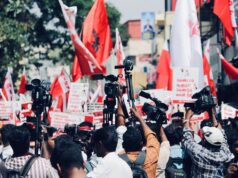
Chennai Power Cuts: Minister Nirmalkumar Claims Some Instigating Residents to Protest Even After Supply Restoration
In a recent statement that’s stirred significant debate across Tamil Nadu, Power Minister V. Senthilbalaji (who goes by ministerial designations) revealed that some individuals are deliberately instigating residents to stage protests against power cuts in Chennai and surrounding areas, despite electricity supply being restored to normal levels.
The minister’s comments come at a time when Chennai residents have been experiencing intermittent power disruptions, raising concerns about the state’s power infrastructure and management capabilities. His claim that protests are being artificially fueled adds a new dimension to the ongoing power crisis discourse in the capital city.
Understanding the Chennai Power Crisis Context
Chennai, India’s fourth-largest metropolitan city, has faced recurring power supply issues over the past few months. The city’s power demands have surged due to increasing urbanization, population growth, and the expansion of IT parks and industrial zones. During peak summer months, the demand for electricity typically reaches its zenith, with air conditioning units running at full capacity across residential and commercial establishments.
The power cuts that prompted these recent controversies weren’t isolated incidents but part of a broader pattern that has affected daily life for millions of Chennaiites. From students struggling to study during exams to small business owners losing productivity, the impact has been tangible and widespread across the city.
Minister’s Allegations: Political Angle or Legitimate Concern?
Minister Nirmalkumar’s statement about certain groups instigating protests raises important questions about the authenticity of public grievances versus potential political mobilization. According to his claims, even after TANGEDCO (Tamil Nadu Generation and Distribution Corporation) restored power supply to affected areas, some individuals were continuing to encourage residents to participate in protest activities.
This allegation suggests either of two possibilities: firstly, that opposition political parties or activist groups were using the power crisis as a platform to challenge the government; or secondly, that the minister’s statement itself could be a strategic move to delegitimize genuine public dissent about infrastructure failures.
In Chennai’s politically vibrant environment, where resident welfare associations and citizen groups are traditionally vocal, distinguishing between organic protest movements and orchestrated campaigns remains challenging.
The Real Issue: Infrastructure and Supply Management
Beyond the allegations and counter-allegations, the core problem remains: Chennai’s power infrastructure needs significant upgrades to meet growing demands. The city’s electricity distribution network, despite recent improvements, struggles during peak demand periods, particularly during summer months from April to June.
TANGEDCO has attributed power cuts to several factors including:
- Maintenance work on aging power lines and transformers
- Increased demand exceeding available generation capacity
- Shortage of power from renewable energy sources during certain seasons
- Technical faults in substations and distribution centers
These challenges aren’t unique to Chennai but affect several Indian metros. However, the frequency and duration of outages in India’s IT capital have been concerning for residents, businesses, and the healthcare sector alike.
Impact on Chennai Residents and Businesses
The power cuts have had ripple effects across various sectors. Small and medium enterprises (SMEs) operating from residential areas have reported significant losses during extended outages. Data centers and IT companies, which form the backbone of Chennai’s economy, have increased their dependence on backup generators, thereby increasing operational costs.
Residential consumers have also invested in backup power solutions like home inverters and battery backup systems to manage unexpected power interruptions, adding to household expenses.
For vulnerable groups including elderly residents, patients on life-support systems, and those with limited financial resources, power cuts pose serious challenges to quality of life and, in some cases, health and safety.
Government’s Response and Future Plans
The Tamil Nadu government has outlined several initiatives to address the power crisis:
- Expansion of renewable energy generation, particularly solar and wind power
- Modernization of distribution infrastructure in major cities
- Smart metering systems to reduce losses and improve efficiency
- Investments in battery storage technology for peak demand management
However, critics argue that these long-term solutions, while necessary, don’t address immediate problems faced by residents experiencing regular blackouts.
What Should Chennai Residents Do?
Here’s practical advice for managing power cuts in Chennai:
- Invest in backup solutions: Consider installing a home inverter or battery backup system. These provide 4-8 hours of backup power depending on capacity and your consumption patterns.
- Stay informed: Download the TANGEDCO mobile app or follow official channels for scheduled power cut notifications. This helps you plan your day accordingly.
- Use energy efficiently: During peak hours, reduce unnecessary power consumption. Use LED bulbs, service your AC regularly, and avoid running multiple high-wattage appliances simultaneously.
- Participate constructively: Rather than joining potentially orchestrated protests, engage with local resident associations to collectively demand accountability from authorities. File complaints on TANGEDCO’s complaint portal with specific incident details.
- Support renewable energy: If feasible, explore solar panel installation for your home. Government subsidies are available for residential solar installations in Tamil Nadu.
- Keep emergency numbers handy: Note down TANGEDCO’s local customer care numbers for reporting faults and emergencies.
- Advocate for infrastructure investment: Contact your local elected representatives and express support for infrastructure modernization projects in your area.
Conclusion
Whether or not some individuals are instigating protests as Minister Nirmalkumar claims, the underlying issue remains genuine: Chennai’s power infrastructure needs strengthening. Residents have legitimate concerns about frequent outages affecting their quality of life. Rather than dismissing public grievances, the focus should be on transparent communication about the timeline for improvements and concrete steps being taken.
For now, Chennai residents must adopt practical strategies to manage power uncertainties while continuing to demand better service from authorities through official channels and civic engagement. The city’s progress depends on both reliable infrastructure and responsible citizenship from its residents.